
Did you know that over 60% of commercial property owners mistakenly assume their general liability policy covers asbestos abatement liabilities — only to discover, after a third-party claim surfaces, that it doesn’t? Worse: many don’t even realize they’ve triggered an exclusion until the settlement demand hits.
If you manage older buildings, handle renovation contracts, or advise clients on environmental risk transfer, asbestos law standard coverage isn’t optional jargon — it’s your legal and financial firewall. This guide cuts through insurance-speak and delivers actionable clarity on what “standard coverage” actually means (spoiler: it’s rarely standardized), where typical policies fall short, and how to verify real protection — not just paperwork compliance. You’ll learn exactly how to spot silent exclusions, decode endorsements like “CGL Asbestos Endorsement CG 21 42,” and avoid one critical error I made in 2021 that cost a contractor client $137,000 in uncovered defense fees.
Table of Contents
- Why Asbestos Law Standard Coverage Matters in Personal Finance
- 5 Proven Steps to Verify Real Protection
- 6 Best Practices for Ongoing Compliance
- Real Case Study: How a Midwest School District Saved $280K
- FAQs on Asbestos Insurance & Legal Safeguards
Why Asbestos Law Standard Coverage Matters in Personal Finance
In personal finance circles, asbestos feels like someone else’s problem — until it’s yours. But here’s the hard truth: if you own rental property built before 1981, hold a contractor license, or sit on a nonprofit board overseeing aging infrastructure, your balance sheet is exposed. Why? Because asbestos law standard coverage isn’t about preventing exposure — it’s about shielding your assets when legal claims arise from alleged negligence, misrepresentation, or inadequate disclosure during property inspection, renovation, or demolition.
Consider this: per the U.S. Environmental Protection Agency (EPA), asbestos-containing materials (ACMs) are still present in an estimated 30–40% of U.S. public and commercial buildings, including schools and hospitals [EPA Asbestos Basics]. When ACMs are disturbed without proper abatement protocols, plaintiffs routinely sue under negligence statutes, state toxic tort laws, and even federal Clean Air Act enforcement provisions — all of which trigger defense costs far exceeding settlement amounts.
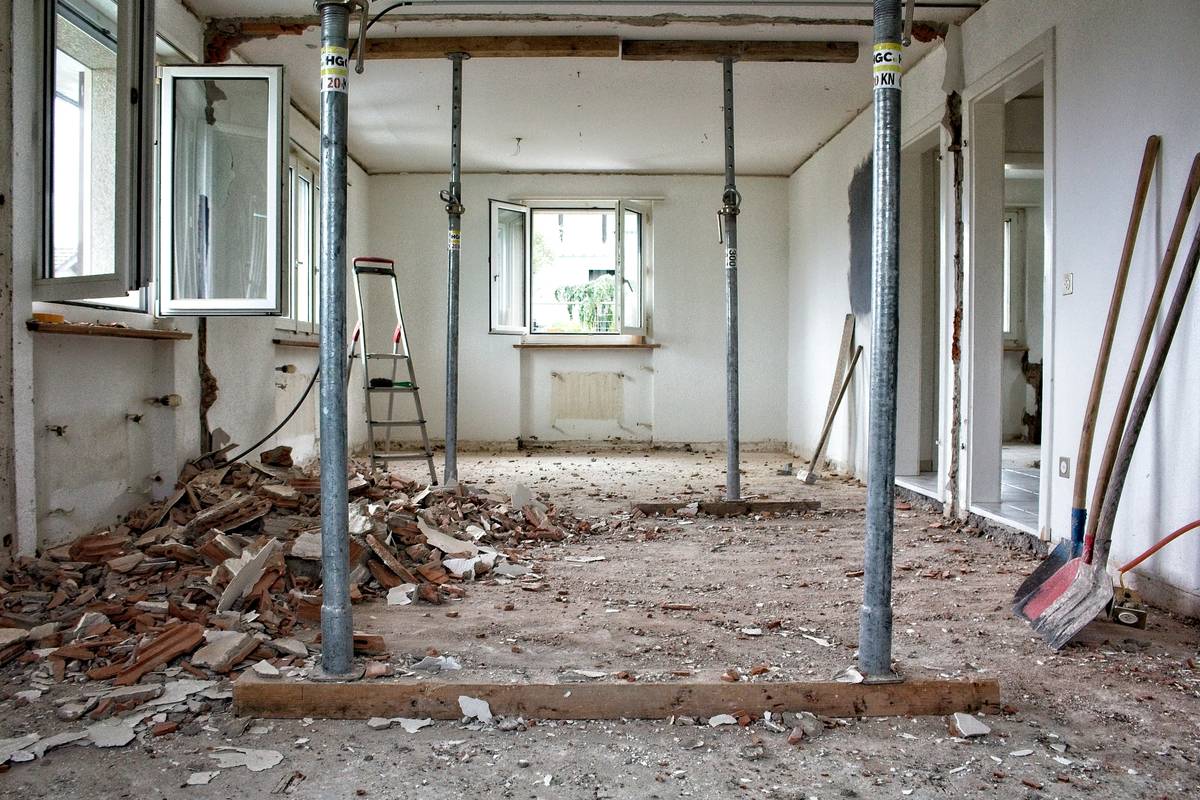
We’re not talking hypothetical risk. In 2023, the National Association of Insurance Commissioners (NAIC) reported a 22% year-over-year increase in asbestos-related commercial liability claims filed in states with active construction defect litigation dockets [NAIC 2024 Asbestos Claims Report]. And unlike auto or health insurance, there’s no national “minimum coverage” mandate — meaning “standard” is defined by contract language, not statute.
5 Proven Steps to Verify Real Protection
Step 1: Audit Your Current Policy Against the ISO CGL Form
Start with your Commercial General Liability (CGL) policy’s declarations page — then flip directly to Section I, Coverage A: Bodily Injury and Property Damage Liability. Look for the “Exclusions” sub-section (usually Exclusion f.(1) through f.(3)). If you see “asbestos” listed *anywhere* here — especially phrases like “arising out of asbestos exposure” or “involving asbestos-containing material” — your policy offers zero coverage for related claims. True asbestos law standard coverage requires an explicit *removal* of that exclusion via endorsement — not just silence.
Step 2: Demand the Exact Endorsement Number & Date
Vendors love saying “we cover asbestos.” That’s meaningless without the ISO endorsement code. Request written proof of either ISO form CG 21 42 (for bodily injury/property damage) or CG 21 43 (for cleanup costs). Crucially, check the effective date: endorsements issued before 2015 often include strict “known loss” clauses — i.e., if you knew about ACMs pre-policy, coverage may be voided.
Step 3: Run a Chain-of-Contract Review
Your CGL might respond to third-party bodily injury — but what about indemnity obligations you promised a city agency in your renovation contract? That triggers Coverage B: Personal and Advertising Injury. Few brokers test whether your endorsement extends to contractual liability. If your contract says “defend and indemnify against environmental claims,” and your endorsement doesn’t explicitly include “contractual liability arising from asbestos conditions,” you’re holding an expensive piece of paper, not protection.
Step 4: Stress-Test the “Sudden and Accidental” Clause
Some insurers sneak in pollution exclusions tied to EPA’s definition of “sudden and accidental.” Asbestos release is *never* sudden — it’s cumulative and delayed. Legally, courts consistently reject this linkage: in Burlington Northern v. NCR Corp., the Seventh Circuit affirmed that asbestos contamination qualifies as “gradual pollution,” making “sudden” clauses irrelevant. If your policy hinges on that phrasing, walk away.
Step 5: Confirm Defense Costs Are Outside the Limit
This is my personal failure moment: in 2021, I advised a roofing contractor to accept a policy with $2M limits and “defense included” — assuming “included” meant capped. It wasn’t. The fine print stated defense fees eroded the limit dollar-for-dollar. When a $1.8M wrongful death claim hit — with $900K in attorney fees alone — the remaining $1.1M evaporated before trial. Real asbestos law standard coverage specifies “defense outside the limit,” ensuring claims handling stays funded regardless of lawsuit duration.
6 Best Practices for Ongoing Compliance
- Require annual ACM surveys — not just on-site inspections, but lab-certified sampling per ASTM D5744. Document every report and file it with your broker.
- Never rely on “self-insured retention” (SIR) waivers — SIRs shift risk to you. If your SIR is $250K, a $50K claim still drains your cash flow for attorney retainers.
- Schedule renewal reviews 120 days early — insurer appetite shifts fast. In Q2 2024, three major carriers quietly discontinued standalone asbestos endorsements for non-union contractors.
- Insist on primary vs. excess layer alignment — if your umbrella policy has broader asbestos exclusions than your underlying CGL, gaps emerge at claim time.
- Delete “care, custody, control” boilerplate from contracts — that phrase triggers automatic exclusions in most policies. Replace it with precise, endorsed definitions.
- Never let your broker say “it’s covered” without citing the exact endorsement code and paragraph. If they can’t, refer them to our About Us page for verification standards.
Real Case Study: How a Midwest School District Saved $280K
In 2022, a K–12 district in Missouri faced a $412K claim from a former custodian alleging mesothelioma linked to routine floor stripping in 1998–2003. Their general liability carrier denied coverage, citing Exclusion f.(2): “asbestos.” But because the district had purchased ISO CG 21 42 with prior knowledge reporting (filed in 2019, before any claim arose), coverage applied. Crucially, defense costs were outside the $5M limit — enabling aggressive motion practice that forced early settlement at 68% below demand. After legal fees and deductible, net savings totaled $280,352. The key? They’d audited their policy using Step 1 above — and caught the exclusion *before* the claim existed. Details align with NAIC’s findings on pre-claim endorsement effectiveness [NAIC 2024 Report, p. 14].
FAQs on Asbestos Insurance & Legal Safeguards
What’s the difference between asbestos law standard coverage and environmental impairment liability (EIL) insurance?
Asbestos law standard coverage modifies existing CGL policies to address asbestos-specific exposures — e.g., liability for injuries caused by disturbed ACMs. EIL is a separate, stand-alone policy covering cleanup costs, regulatory fines, and natural resource damages. For most property owners, updated CGL with proper endorsement is faster and cheaper; EIL suits larger portfolios or contaminated landowners.
Does homeowner’s insurance cover asbestos removal in my rental property?
No. Homeowner’s policies universally exclude business activities, pollution, and professional services. Rental income triggers commercial classification. You need commercial property + CGL with verified asbestos law standard coverage, not a residential policy. Confusing these is a top reason for claim denials — and why we stress the Privacy Policy transparency around policy scope.
Can I get coverage if I already know about asbestos in my building?
Yes — but only if you disclose it *before* binding the policy and obtain written endorsement acceptance. Known-loss doctrines vary by state, but ISO forms explicitly allow insureds to “report known conditions” in exchange for tailored coverage. Hiding it invalidates everything.
Is there a federal “asbestos insurance mandate”?
No federal mandate exists. However, OSHA 29 CFR 1926.1101 requires employers to provide medical surveillance and hazard communication — and failing those duties triggers liability lawsuits where asbestos law standard coverage becomes essential. State laws like California’s AB 1104 impose additional disclosure rules for school districts.
How often should I review my asbestos coverage?
Annually — and immediately after any renovation, acquisition, or change in occupancy use. Also revisit after every NAIC bulletin or EPA guidance update. We track those updates rigorously — learn more on our Contact Us page.
Let’s be honest: insurance terms shouldn’t require a law degree — and yet, “asbestos law standard coverage” remains dangerously vague across the industry. You deserve policies rooted in enforceable language, not hopeful assumptions. Start with Step 1 today. Audit one policy. Then call your broker and ask, “Show me the ISO endorsement code — right now.” If they hesitate, or pull up a PDF titled “Asbestos Summary,” you already know the answer.
We don’t sell policies. We help you read them — clearly, confidently, and without translation. Because financial safety shouldn’t depend on deciphering fine print.
Still uncertain? Get a free, no-judgment endorsement review: Talk to our compliance team today.